Recuerdos: 3
LibroLicencia abierta
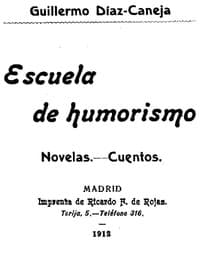
Guillermo Díaz-Caneja
Se abre en Project Gutenberg. Obra de dominio público vía Project Gutenberg.
"Escuela de Humorismo: Novelas.—Cuentos" by Guillermo Díaz-Caneja is a collection of humorous narratives likely written in the early 20th century. The work reflects on the struggles of everyday life with a comedic lens, focusing primarily on the character Jacinto, a young office worker navigating the challenges of family life and financial stress. The narrative presents a blend of humor and pathos as it explores themes of poverty, aspiration, and the human condition. The opening portion introduces the protagonist, Jacinto, who works in a government office and is struggling to balance his modest salary with the needs of his growing family. In a lively conversation among his colleagues, they jokingly speculate on Jacinto's writing abilities, showcasing the humor that pervades the office culture. The text then delves into Jacinto's domestic challenges, including the illness of his son and the economic strain he faces as he attempts to write comedic articles to provide for his family. Despite his weariness, he is encouraged by the thought that humor might be his salvation, highlighting the central conflict between his aspirations to bring joy through writing and the harsh realities of his life. (This is an automatically generated summary.)
Díaz-Caneja, G. (s.f.) Escuela de Humorismo: Novelas.—Cuentos.. https://www.gutenberg.org/ebooks/44309
Esta obra no tiene año de publicación, editorial en el catálogo, así que la referencia queda incompleta. Verifícala en la fuente original antes de usarla.
Los archivos BibTeX y RIS se importan en Zotero, Mendeley y gestores compatibles.