Recuerdos: 3
LibroLicencia abierta
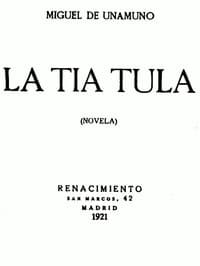
Miguel de Unamuno
Se abre en Project Gutenberg. Obra de dominio público vía Project Gutenberg.
"La Tía Tula (Novela)" by Miguel de Unamuno is a novel written in the early 20th century. The story explores themes of motherhood, duty, and the complexity of familial relationships through the character of Gertrudis, affectionately known as Tula, who takes on significant responsibilities within her family after the death of her sister Rosa. The narrative likely delves into the dynamics of love and sacrifice, as well as the societal expectations placed on women during this time. At the start of the novel, readers are introduced to Tula and her vibrant sister Rosa, who are living together after the loss of their parents, under the care of their uncle, a priest. As Rosa engages in a budding relationship with Ramiro, Tula maintains a more serious demeanor, often guiding Rosa with practical wisdom. Meanwhile, Tula’s introspection hints at her deeper understanding of familial love and sacrifice, setting a stark contrast to Rosa's light-hearted approach to love and relationships. As the story unfolds, it becomes evident that Tula's role within the family is vital, foreshadowing the novel's exploration of her character's potential struggles and triumphs in the face of change. (This is an automatically generated summary.)
de Unamuno, M. (s.f.) La Tía Tula (Novela). https://www.gutenberg.org/ebooks/44358
Esta obra no tiene año de publicación, editorial en el catálogo, así que la referencia queda incompleta. Verifícala en la fuente original antes de usarla.
Los archivos BibTeX y RIS se importan en Zotero, Mendeley y gestores compatibles.