Recuerdos: 3
LibroLicencia abierta
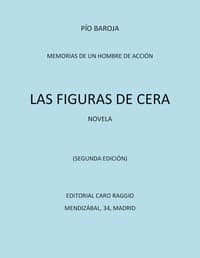
Pío Baroja
Se abre en Project Gutenberg. Obra de dominio público vía Project Gutenberg.
"Las figuras de cera: novela" by Pío Baroja is a fictional work written in the late 19th century. The narrative appears to be set against the backdrop of the first Spanish civil war, weaving through the lives of various characters involved in a tapestry of intrigue and historical reflection. The main character, Chipiteguy, is a trapper and iron merchant whose life intersects with a range of colorful individuals as they navigate the complexities of tumultuous times. The opening of the novel introduces us to Aviraneta and Leguía, two characters engaged in a lively discussion about a manuscript that recounts historical events related to their lives. They reflect on figures like the Spanish consul of Bayonne, Don Agustín Fernández de Gamboa, and the exploitative behaviors that emerged during the civil war. The dialogue hints at the themes of truth versus romanticized narratives, contrasting different literary approaches to history and storytelling. The scenery shifts to 1838, where several galeras (carriages) traverse the rugged landscapes of Roncesvalles, led by characters such as Chipiteguy and his associates, establishing a sense of intrigue and foreboding as they embark on a journey fraught with potential hidden motives. (This is an automatically generated summary.)
Baroja, P. (s.f.) Las figuras de cera: novela. https://www.gutenberg.org/ebooks/63680
Esta obra no tiene año de publicación, editorial en el catálogo, así que la referencia queda incompleta. Verifícala en la fuente original antes de usarla.
Los archivos BibTeX y RIS se importan en Zotero, Mendeley y gestores compatibles.